
For children & teenagers.
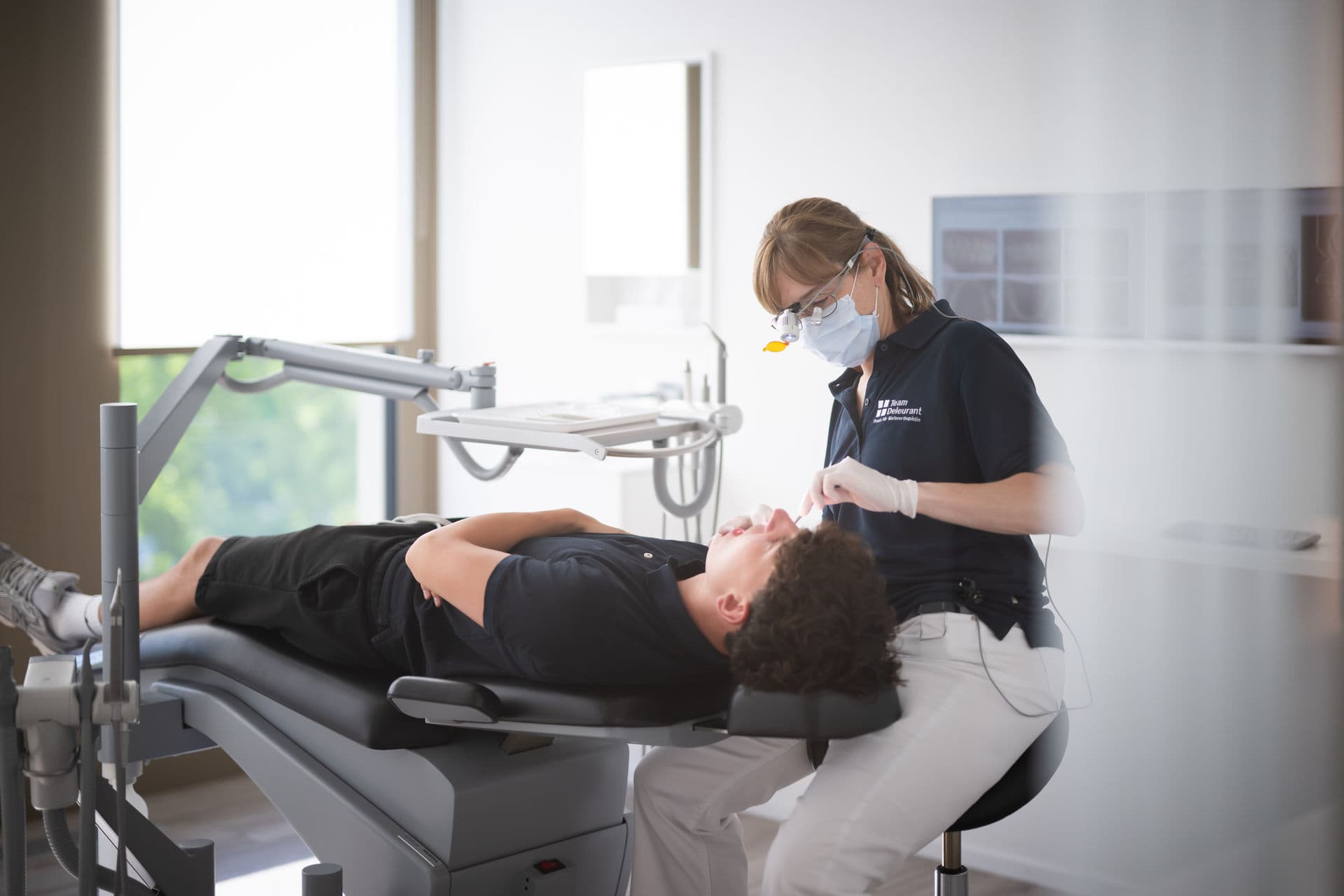
In children we guide natural growth — gently and at the right moment. That lays the foundation early for a healthy, stable bite.
There are few things lovelier than your child's carefree laugh. We make sure it stays — gently and at the right moment.
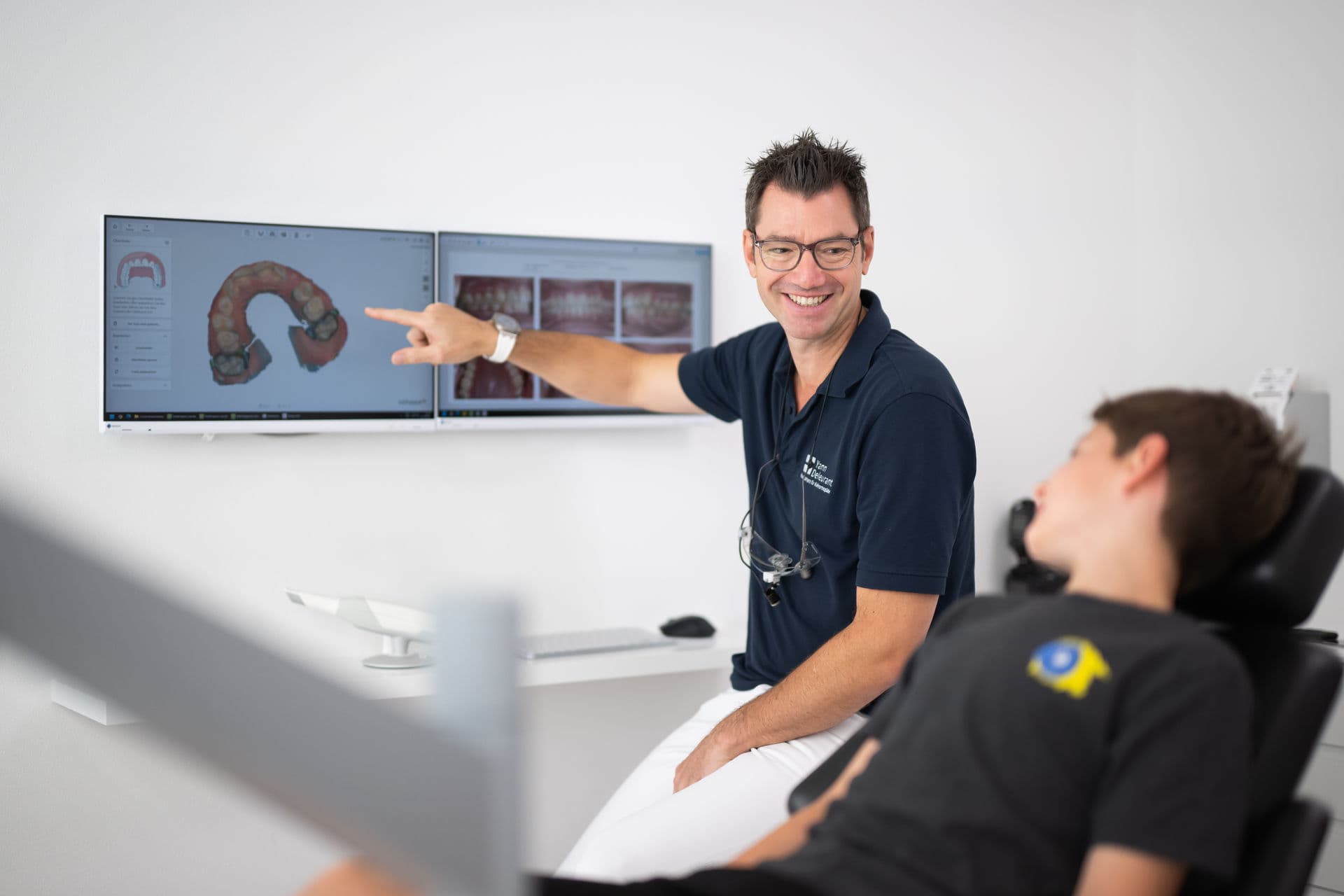
Before we propose any treatment, we sit down together. We look at the starting position side by side, respond to your needs and show you the options. That is how we find the direct route to the goal: a healthy bite and a beautiful smile.
Growth is our strongest ally. A first check-up at age 7–8 shows whether and when treatment makes sense.
Removable appliances guide jaw growth gently — often wearing them overnight is enough, without intervening in the full arch.
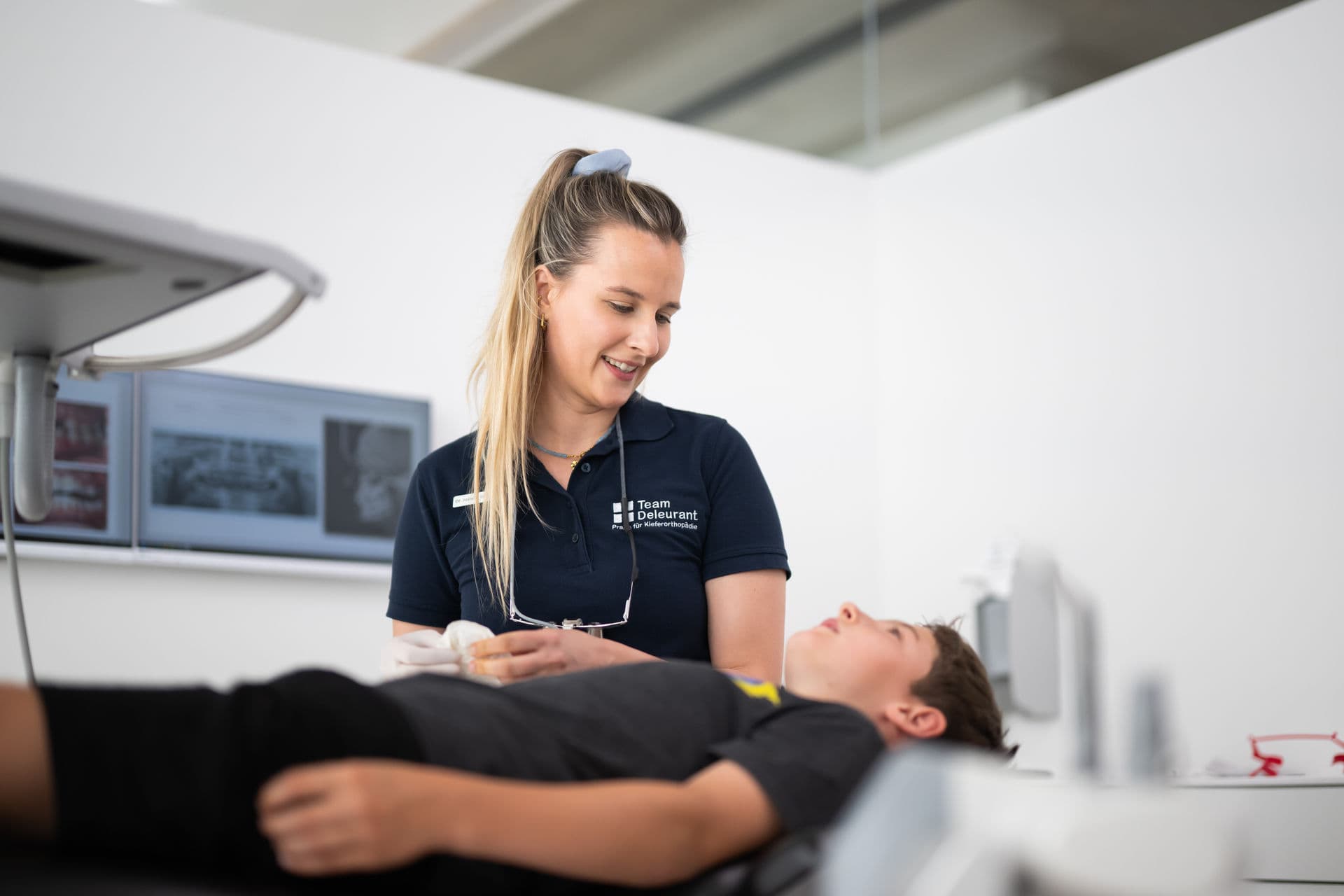
We take the time to explain every step in a way children understand. Taking part decides the outcome — and makes the path easier.
Fünf Schritte.
Ein klarer Weg.
From the first check-up to aftercare — timed to your child's growth. You always know where you stand.
Frequently
asked.
At what age should my child see an orthodontist?
We recommend a first orthodontic check-up at the age of 7–8. That way we recognise early whether and when treatment makes sense — and prevent misalignments from becoming entrenched.
What if my child is still too young for treatment?
Then we monitor growth without treating. Often the best step is to wait patiently for the right moment — we will get in touch when it arrives.
What if my child doesn't want to wear the appliance?
We take the time to explain every step clearly and work closely with parents. Taking part decides the outcome — and most children are proud to be part of the plan.
Is a removable brace always enough?
Not in every case. Fixed treatment often follows the growth phase. We plan the whole path from the outset — so there are no surprises.
Does my child really need braces?
The best way to determine this is through an orthodontic examination. Not every tooth or jaw alignment necessarily requires treatment. We would be happy to discuss your child’s individual findings with you in person.
Does my child really need braces?
The best way to determine this is through an orthodontic examination. Not every tooth or jaw alignment necessarily requires treatment. We would be happy to discuss your child’s individual findings with you in person.
What type of braces are suitable for me or my child?
This depends on the individual findings. Once the necessary records have been prepared, we will discuss the detailed treatment plan with the parents and recommend the most suitable treatment option.
How long does orthodontic treatment take?
This depends on the treatment we recommend. A rapid palatal expander is usually active for around 2 weeks, but remains in the mouth for a further 6–9 months. A removable night brace is typically worn for about 1 year, while fixed braces (brackets) are usually worn for 1–1.5 years, depending on the individual findings. We will discuss the exact treatment duration with you personally during the treatment consultation.
Does health insurance cover the cost?
In some cases, basic health insurance may contribute to the costs. However, the costs are mainly covered by supplementary insurance. We recommend checking this directly with your insurance provider in advance.
Is it possible to pay in installments?
Please feel free to speak with us—we will be happy to find a suitable payment solution together.
Does fitting or adjusting the braces hurt?
Treatment at our practice is pain-free. You may only notice a slight feeling of pressure during the first few days and for around 2 to 3 days after each appointment.
How often are follow-up appointments scheduled?
Check-ups are usually scheduled every 4–8 weeks, depending on the chosen treatment method.
What can I eat with braces, and what should I avoid?
Hard, sticky, or very chewy foods (such as caramel, whole nuts, or hard bread) should be avoided, as they can damage the brackets or wires. Softer foods are generally not a problem.
How do I properly clean my teeth with fixed braces?
When your braces are fitted, we will show you exactly which tools are most suitable, such as interdental brushes and special toothbrushes, and explain what you should pay particular attention to.
How long do I need to wear a retainer?
To maintain the results achieved, a retainer is often worn long-term.